Your Parent Says, "I'm Fine at Home." What Now?
Most older adults want to stay in their own home, and that wish deserves respect. Here is what the resistance is really about, how to respond without pushing your parent away, and where Albuquerque and Rio Rancho families can turn for support.

Penny Krautbauer
Transitions in Senior Care, Rio Rancho NM
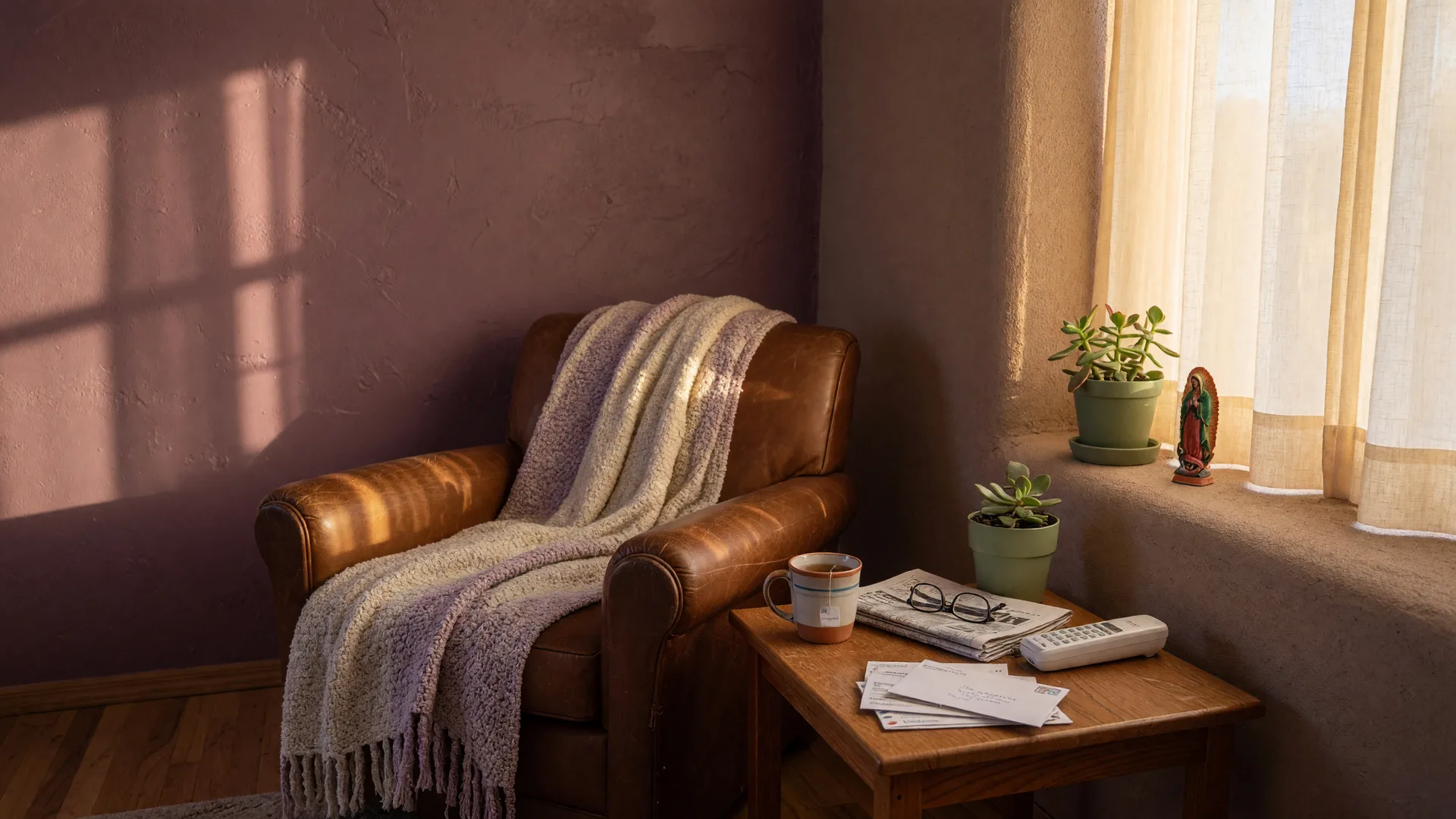
If your parent has ever said, "I'm fine, I don't need any help," you already know how the conversation usually goes: you worry, they insist, and everyone ends the call a little more frustrated. You are not alone, and the resistance is rarely stubbornness. The vast majority of older adults want to remain in their own home, so a parent's wish to stay put is a normal, human desire for independence. This guide covers what that resistance is really about, how to respond in a way that keeps the door open, and the local Albuquerque and Rio Rancho resources that can help your family find a middle path, before a fall or an unexpected change makes the decision for you.
Why does my parent insist they're fine when I can see they're struggling?
Resistance to help almost never comes from stubbornness. It usually comes from fear: fear of losing independence, privacy, and control, grief about leaving a home full of memories, and worry about what the change would mean for the family. And your parent is far from alone in wanting to stay put. The Pew Research Center reports that 93% of U.S. adults 65 and older live in their own home or apartment, and AARP surveys consistently find that about three-quarters of adults 50 and older want to remain in their current home as they age. So the wish to stay home is normal, and it deserves respect. It is also worth ruling out the quiet causes behind the resistance: depression, hearing loss, a medication side effect, or early memory changes can all make a parent insist everything is fine when it is not. A visit to a geriatrician or the parent's primary care doctor can help sort out what is really going on.
How do I bring up my concerns without pushing them away?
Start by listening, not by listing. Ask open questions: what do you love about home? What worries you about getting older? What would make life easier? Then really listen to the answers. Reframe your words, because language shapes how help is received: talk about support and staying independent, not about care or moving. Frame a small change as a way to stay home longer, not as a first step out the door. Share how their situation affects you, honestly and without blame, because most parents respond to a child's worry more readily than to a lecture. And start small. A weekly grocery run, help with housekeeping, or a meal delivery is far easier to accept than a big decision, and every small yes builds trust for the conversations ahead.
What small steps can we agree on first?
Look for the smallest changes that make the biggest difference for safety and peace of mind. Grab bars in the bathroom, nightlights along the path from bed to bathroom, and cleared walkways reduce the risk of a fall without changing a single routine. A medical alert device gives everyone a safety net without a caregiver in the house. Meal delivery, or a few hours of in-home help each week, can lighten the daily load while your parent stays fully in charge of their own life. Adult day services, like Share Your Care with sites in Albuquerque and Rio Rancho, offer daytime activities, meals, and supervision while giving the family caregiver a real break. None of these steps requires a move, and each one gives the family an honest picture of what is working and what is not.
What if there is a real safety risk at home?
When safety is genuinely at stake, the conversation changes, and it is okay to say so calmly. Name the specific concern: the stove left on, the missed medications, the fall last month. Involve the doctor, who can describe the level of support actually needed, which takes much of the guesswork, and the blame, out of the discussion. If home is no longer safe even with help, the loving answer may be more hours of in-home care, adult day services, or a senior living community, and exploring those options before a crisis is exactly what planning ahead is for. You do not have to wait for an emergency to learn what the right fit looks like.
What local help is available in Albuquerque and Rio Rancho?
Families in our area have real, local support for exactly this situation. The New Mexico Aging and Disability Resource Center, at 800-432-2080, offers free, unbiased options counseling for any family wondering what comes next. The City of Albuquerque's Senior Information Line, at 505-764-6400, connects families with information, referral, and home services. For families in Rio Rancho, the City's Division of Senior Services, at 505-891-5018, and the Northcentral New Mexico Non-Metro Area Agency on Aging, at 1-866-699-4927, serve Sandoval County residents. Share Your Care provides adult day services at sites in Albuquerque and Rio Rancho, and in-home care agencies across both cities can start with just a few hours a week. The Family Caregiver Center of New Mexico, at 505-494-4021, offers free care navigation, respite, and support groups for family caregivers. You do not have to figure this out alone.
When is it time to accept that you can't change their mind?
You cannot force a parent to accept help, and trying to will only damage the relationship. What you can do is keep the door open, keep gathering honest information, keep the conversation gentle, and take care of yourself. Many families find that a parent comes around after a fall, a hospital stay, or when a friend makes a similar move, so your job is to be ready when they are. In the meantime, your own wellbeing matters. Caregiver support through the Family Caregiver Center of New Mexico, at 505-494-4021, and the National Family Caregiver Support Program can give you a place to talk, a real break, and the reassurance that you are not letting anyone down by asking for help.
A gentle approach when your parent says they're fine
- Listen first: ask what they love about home and what worries them, and let them answer fully.
- Rule out the quiet causes: a doctor's visit can reveal depression, hearing loss, or medication side effects behind the resistance.
- Change your words: talk about support and staying independent, not about care or moving.
- Start with one small yes: groceries, housekeeping, a medical alert device, or a few hours of in-home help.
- Make it about you: share your worry honestly, without blame.
- Bring in a neutral voice: a geriatrician, free options counseling at 800-432-2080, or a trusted local senior care guide.
- Keep the door open: most families have this conversation many times before anything changes.
- Take care of yourself: the Family Caregiver Center of New Mexico, at 505-494-4021, offers free support.
Your parent's wish to stay home deserves respect, and so does your worry. The goal is not to win an argument. It is to keep the conversation going until help feels like support rather than surrender, and to be ready when the moment is right. You do not have to figure this out alone. Call me before the crisis, or when the crisis happens, and I will help you figure out what comes next. Helping families navigate the journey to senior care with confidence and peace of mind is what I do, one family at a time.
Need help with your own situation?
Penny listens first, then helps you understand what comes next. No pressure, ever.