Taking Care of Mom While Caring for Your Own Family: A Sandwich Generation Guide
If you are helping an aging parent while also working, raising children, or running your own household, you are part of the sandwich generation. Here is how to recognize when the load is too heavy, and the real Albuquerque and Rio Rancho support, from free respite vouchers and adult day programs to getting paid for family care.
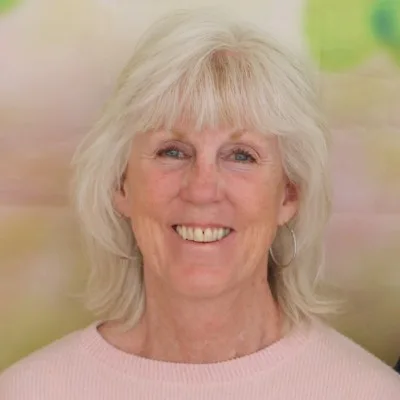
Penny Krautbauer
Transitions in Senior Care, Rio Rancho NM
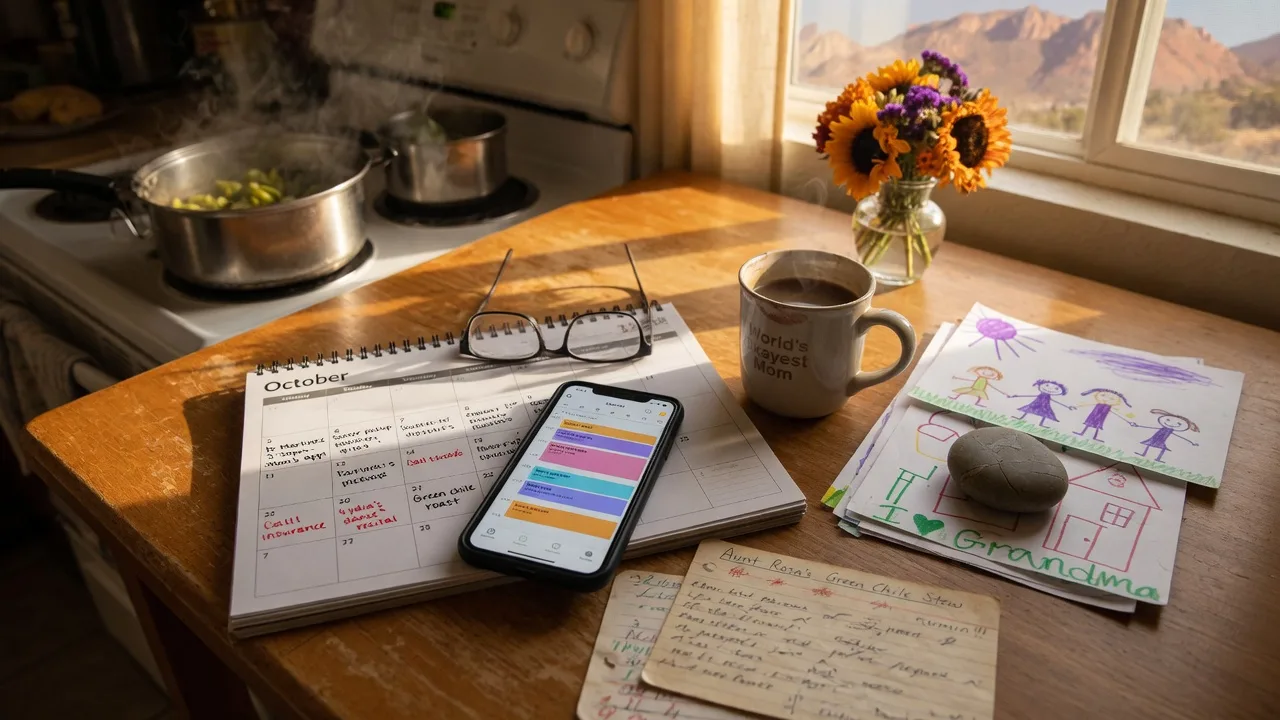
You may not have a name for what you are doing, but you are living it: helping Mom or Dad with appointments, medications, and meals while also working, raising children, or keeping your own household running. Families in this position are often called the sandwich generation, squeezed between two generations that both need them. The work is done out of love, but it can quietly become more than one person can carry. This guide covers how to recognize when the load is too heavy, the support that actually exists in Albuquerque and Rio Rancho, and when a senior living community may be the most loving option for everyone.
What does it mean to be in the sandwich generation?
A family caregiver who supports an aging parent while also raising children, or supporting a grown child, is part of what researchers call the sandwich generation. It is not a small group: a 2022 analysis by the Pew Research Center found that about one in four American adults is caring for an aging parent while also raising or supporting their own children. In Albuquerque and Rio Rancho, where extended families live near one another and grandparents often help raise grandchildren, that role is especially common. The everyday shape of it looks familiar: driving Mom to an appointment, checking on Dad's medications, coordinating with siblings by text, then coming home to homework, dinner, and a job that expects you to show up as if nothing else is going on. There is no badge for this work, but it is real, and it is heavy.
Why does caregiving feel so heavy when you are also working and parenting?
Because you are doing two full jobs at once, and one of them has no schedule, no breaks, and no paycheck. Parent care is unpredictable: a fall, a hospital stay, or a new diagnosis can absorb every spare hour overnight, while work, children's activities, and your own health still demand attention. Research on family caregiving shows the strain compounds when a person carries more than one role, and that is exactly what the sandwich generation reports, higher levels of stress, anxiety, and financial pressure than caregivers with a single role. There is also the invisible cost: the guilt of feeling that you are not doing enough for either generation. If that feeling is familiar, please hear this. You are not failing anyone. You are carrying more than one person can reasonably carry, and the answer is support, not self-criticism.
How do you know when you need more help?
Caregiver overload rarely announces itself; it shows up in small changes. Watch for exhaustion that sleep does not fix, irritability with the people you love most, skipped checkups of your own, weight changes, more frequent colds, trouble concentrating at work, or a growing sense of dread about the next call from Mom or Dad. Other signs are practical: meals for your parent are getting missed, medications are being managed from memory instead of from a list, or you have started canceling your own plans to cover theirs. There is also the quiet sign of resentment, the feeling that you are the only one carrying this, even when siblings live far away. None of these make you a bad daughter or son. They are simply the signal that your family needs a plan that does not run entirely on your energy.
What local support exists for family caregivers in Albuquerque and Rio Rancho?
You do not have to build this plan alone, and our area has support that most families do not know about. The National Family Caregiver Support Program, run in New Mexico by the Aging and Long-Term Services Department through local Area Agencies on Aging, offers free respite care, adult day care vouchers, caregiver training, and information and referral, with no income test; start with the Aging and Disability Resource Center at 1-800-432-2080. The New Mexico Caregivers Coalition currently offers a Lifespan Caregiver Respite Voucher, free respite for caregivers whose loved one lives in New Mexico and lives with dementia, Parkinson's, a brain injury, or another neurodegenerative condition, needs help with at least two daily activities, and receives no other paid care. The Family Caregiver Center of New Mexico, 505-494-4021, provides free care navigation and connects families to respite and support groups. And for a day of relief, adult day programs give your parent a safe, engaging day out while you recharge: Share Your Care Adult Day Services runs seven locations in our area, including sites across Albuquerque and one in Rio Rancho at 1004 24th St SE, 505-897-9025, with its administrative office at 505-298-1700. Cornucopia Adult & Family Services at 2002 Bridge Blvd SW in Albuquerque, 505-877-1310, and St. Joseph Senior Care at 904 Las Lomas Rd NE in Albuquerque also offer adult day options, and in-home respite agencies such as Tender Touch Respite Services serve Rio Rancho, Albuquerque, and Corrales.
Can a family member be paid to provide care?
One of the best-kept secrets in New Mexico senior care is that, in some programs, a family member can be paid for the care they already give. Under the state's Mi Via waiver, a family caregiver can sometimes be hired as the paid caregiver for a loved one, and Turquoise Care's Self-Directed Community Benefit allows members to hire family members for the care they provide. These options are designed for families who are already doing the work and need it to become sustainable, so caregiving does not have to drain a family's finances on top of their time and energy. Eligibility and rules vary, so a free call to the Aging and Disability Resource Center at 1-800-432-2080 is the best first step to find out whether your family qualifies.
When is it time to consider a senior living community?
There comes a point when the kindest decision for everyone is a different kind of support. If your parent's needs are growing faster than your family can cover them, if they are unsafe at home between your visits, if isolation is weighing on their mood, or if your own health is suffering under the load, that is not a reason for guilt; it is a reason to plan. Senior living communities bring meals, medication management, activities, and support together in one place, and many families find that a parent who was lonely at home begins to thrive with neighbors and staff who know them by name. As a Certified Senior Transition Specialist, my role is to help your family understand the options, tour communities, and find the right fit, at the right time, for the right reasons. Choosing a community is not about giving up; it is about finding a safer, more supportive environment for the person you love, and a sustainable way for your family to stay their family.
A starter list for sandwich-generation families
- Write down everything you do for your parent in a typical week, so you can see the real scope of the load.
- Call the Aging and Disability Resource Center at 1-800-432-2080 and ask about free caregiver support, respite, and adult day care vouchers.
- Ask about the New Mexico Caregivers Coalition's free Lifespan Caregiver Respite Voucher if your loved one lives with dementia, Parkinson's, a brain injury, or another neurodegenerative condition.
- Call the Family Caregiver Center of New Mexico at 505-494-4021 for free care navigation, respite referrals, and support groups.
- Try one day at an adult day program, like Share Your Care in Rio Rancho at 505-897-9025, and use the time to rest, not to run errands.
- Ask whether a family member can be paid for care through the Mi Via waiver or Turquoise Care's Self-Directed Community Benefit.
- Schedule your own checkup; your health is part of your parent's care plan, too.
- If the load keeps growing, talk with Penny about senior living communities before a crisis makes the decision for you.
Being the bridge between two generations is a beautiful and exhausting role, and you were never meant to carry it alone. You do not have to wait for a crisis to build a better plan for your parent and for yourself. Call me before the crisis, or when the crisis happens, and I will help you figure out what comes next. Helping families navigate the journey to senior care with confidence and peace of mind is what I do, one family at a time.
Need help with your own situation?
Penny listens first, then helps you understand what comes next. No pressure, ever.