Visiting Mom or Dad for the Holidays? What to Look For
A holiday visit is a natural moment for a gentle check-in. Here is what Albuquerque and Rio Rancho families can quietly observe, how to bring up concerns without a fight, and where to turn for local support.

Penny Krautbauer
Transitions in Senior Care, Rio Rancho NM
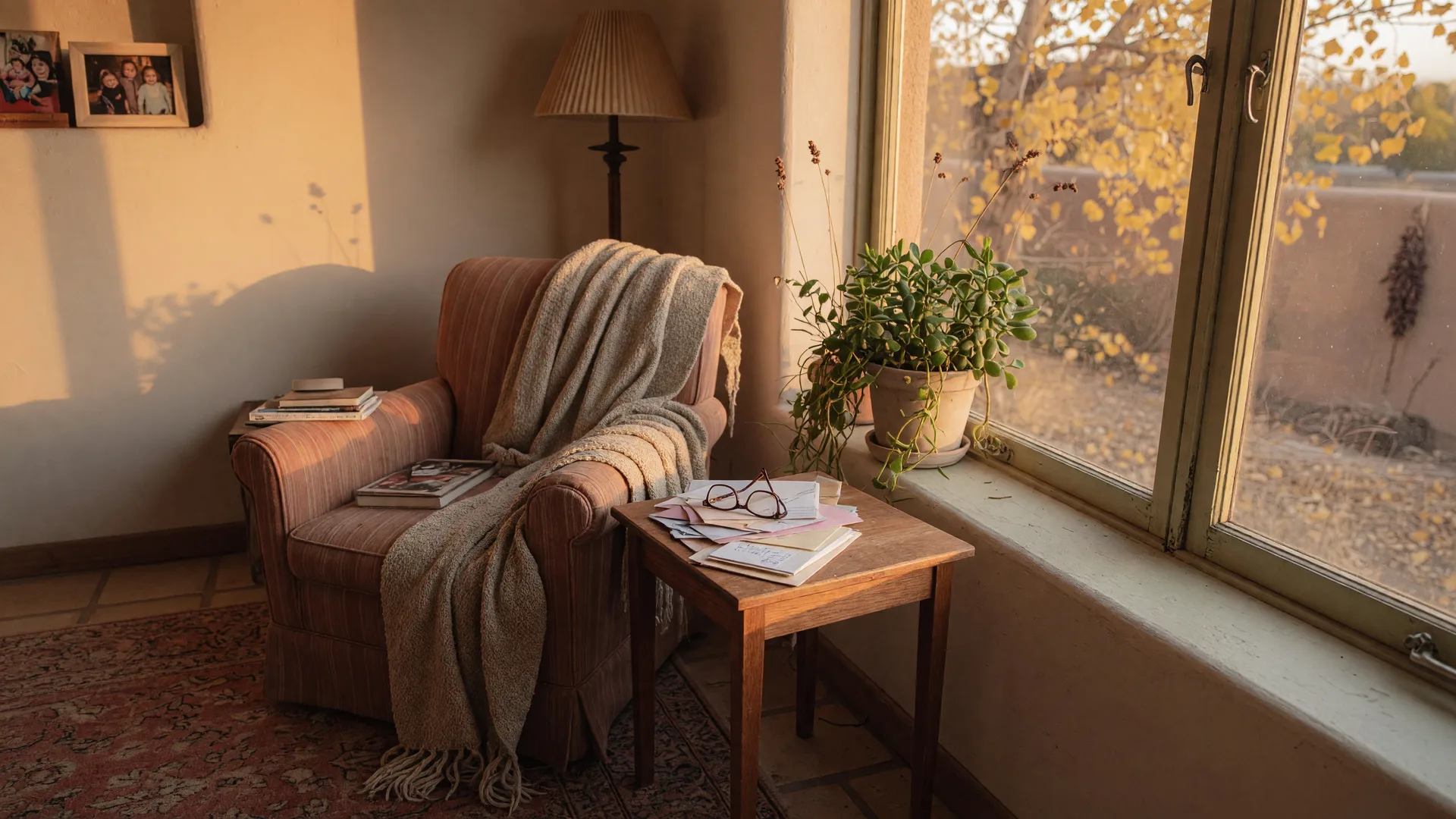
For families who live out of town, the holidays are often the one time of year you get to really see how Mom or Dad is doing. Between the meals and the catching up, there is a quieter opportunity: a chance to notice, gently and honestly, how life at home is really going. This guide walks through what to look for during a holiday visit, how to tell the difference between a rough week and something that needs attention, and how to bring up what you noticed in a way that keeps your parent in the conversation. A holiday visit can be the calm, caring moment a family uses to plan ahead, instead of waiting for an unexpected change to force the decision.
Why is a holiday visit a good time to check in?
Because you are already there, and because you see things a phone call cannot show you. Over a few days in the house, you get a natural, unhurried look at how your parent manages meals, medications, bills, and the day-to-day rhythm of home. You also catch the small changes that are easy to miss when you check in by video or by phone. The goal is not to test or interrogate. It is to observe like a caring guest, jot a few gentle notes to yourself, and come away with an honest picture you can talk about together. Planning ahead from a holiday visit is far easier than deciding in a hospital hallway after an unexpected change.
What should you look for in the home?
Look around the way you would help a friend pack for a trip, not the way you would inspect a house. Notice whether the fridge has real food and whether anything is past its date. Peek at the mail and the bills: are they opened, or piling up unread? Check the smoke detector works, look for loose rugs, cords, or dim hallways that make the path to the bathroom harder at night. A few burnt pans in the sink might just mean a busy week, but a pattern of scorched cookware, an empty fridge, or a smell of gas is worth taking seriously. These small signs are how a family learns whether the home is still safe and supportive, before a fall makes the question urgent.
What should you notice about day-to-day routines?
Watch how your parent manages the ordinary parts of the day. Are medications organized and taken on time, or are bottles unopened and dates confusing? Is your parent eating regular meals, or skipping them and living on snacks? Is the laundry getting done, and is grooming and hygiene about the same as it always was? Notice the small details: difficulty opening a pill bottle, hesitation on the stairs, holding the counter to cross the kitchen. None of these alone means anything dramatic, but a few of them together are a useful signal that a little more support, whether in-home help or a conversation about a senior living community, might be worth exploring while there is still time.
What signs should you watch for in your parent themselves?
Pay gentle attention to your parent, not just the house. Is there unexplained weight loss, or clothes that no longer fit? Are there bruises on the arms, legs, or face that no one can explain? Is your parent steady on their feet, or holding walls and furniture to stay balanced? Notice memory and mood too: repeated confusion about the day, difficulty following a conversation, or a new withdrawal from people they used to enjoy. And take a look at the car for new dents or scratches, a quiet sign that driving may be getting harder. The point is not to diagnose anything. It is to gather a gentle, honest picture you can share with your parent and their doctor, and to decide together whether more support would help.
How do you bring up what you noticed without starting a fight?
Lead with care, not with a list. Start with something like, "I've been worried about you, and I just want to make sure you're okay," rather than "You need help." Share one specific, caring observation instead of a pile of complaints, and ask how your parent feels about their home and their week, then really listen to the answer. Talk about choices and options, and invite your parent into every decision, because a plan they help shape is one they are far more likely to accept. Let the conversation breathe, and come back to it again in a few days. You do not have to solve everything in one visit, and you do not have to have the conversation alone.
What local help is available in Albuquerque and Rio Rancho?
Families in our area have real, local support after a holiday visit. The New Mexico Aging and Long-Term Services Department offers free caregiver resources and care planning help at aging.nm.gov, and its statewide Aging and Disability Resource Center, at 800-432-2080, provides free, unbiased options counseling for any family wondering what comes next. The City of Albuquerque Department of Senior Affairs, at 505-764-6400, offers information, meals, transportation, and case management for older adults, and the City of Rio Rancho Division of Senior Services, at 505-891-5018, connects residents 55 and older with programs at the Meadowlark and Broadmoor senior centers. Adult day services like Share Your Care, with sites in Albuquerque and Rio Rancho, can also give a family daytime support and a caregiver a real break. You do not have to figure this out alone.
A gentle holiday check-in checklist
- Walk through the home: food in the fridge, opened mail, working smoke detector, clear paths from bed to bathroom.
- Notice how medications are managed: organized and on time, or unopened bottles and confusing dates.
- Watch day-to-day routines: regular meals, laundry, grooming, and how steady your parent is on their feet.
- Look gently at your parent: unexplained weight change, bruises, new dents on the car, or memory and mood shifts.
- Write a few notes to yourself so you can compare honestly with last year's visit.
- Start one caring conversation, share one observation, and invite your parent into the decision.
- Talk with your parent's doctor about anything that concerns you.
- Call the New Mexico Aging and Disability Resource Center at 800-432-2080 for free, unbiased options counseling.
A holiday visit can be the gentle moment a family uses to plan ahead, before an unexpected change makes the decision for you. You do not have to get it right in a single visit, and you do not have to do it alone. Call me before the crisis, or when the crisis happens, and together we will figure out what comes next. Helping families navigate the journey to senior care with confidence and peace of mind is what I do, one family at a time.
Need help with your own situation?
Penny listens first, then helps you understand what comes next. No pressure, ever.